Expertise & editor scope (YMYL)
This guide is by the Dr. Luis Garcia Biomagnetism editor team. We focus on how Dr. Luis Garcia's training teaches scope, safety, and biomagnetic pair ideas. We do not diagnose insomnia. We do not order sleep studies. We are not your doctor. We cite NIH/CDC-grade sleep sources in our sources section. We publish under our editor policy.
Insomnia as more than "poor sleep habits"
Short answer: Chronic insomnia usually needs medical screening and proven care like CBT-I first. magnet work is only an optional wellness add-on, not a root-cause fix for apnea. mood disorders. or medication side effects.
Persistent insomnia often reflects overlapping drivers: hyperarousal (body and mind "stuck on"). irregular light exposure, pain, mood disorders, substances (caffeine, alcohol. some medicines). and primary sleep disorders such as obstructive sleep apnea or restless legs. That is why credible care usually starts with history. screening. and sometimes objective testing—not a single wellness tool pitched as a fix.
Biomagnetism enters this picture, if at all, as a complementary approach some people discuss with trained practitioners: static magnets placed in pairs after an assessment. It does not correct apnea events, replace CBT-I, or change prescribed medicine on its own.
Real-world use: where sessions often focus (pro lens)
Short answer: Many therapists map stress–nervous-system themes clients link to feeling "wired but tired,". then place static magnet pairs while the client rests. descriptive of common practice, not proof of better sleep.
Protocols vary by training lineage and local rules. In many biomagnetism practices, sessions tied to sleep complaints may spend time mapping stress–immune–nervous-system themes that clients link to feeling "wired but tired." Practitioners may discuss areas associated with stress regulation, neuromuscular tension, and terrain-style balance concepts—then place medium-strength static magnets in configured pairs while the client rests. This is descriptive of what some pros do, not proof of a sleep outcome.
- Stress response and tension patterns clients associate with nighttime rumination
- Supportive balancing work framed around nervous system “overload” narratives (wellness scope)
- pH / terrain language used inside biomagnetism training—distinct from hospital laboratory testing
What a session can look like (typical flow)
Short answer: Intake and safety screening, muscle-test-style pair selection, 15–30 minute magnet placement while reclining. then follow-up with your sleep clinician. not a replacement for CBT-I, CPAP. or sleep studies.
- Intake: sleep schedule, snoring, medicines, mental health, and safety red flags.
- Assessment: many qualified pros use muscle testing to prioritize pairs. This is a training method, not a universal medical standard.
- Placement: biomagnetic pairs positioned on clothing or skin; clients often recline 15–30 minutes per sequence (timing varies).
- Follow-up: sleep still tracked with clinicians; biomagnetism does not replace sleep diaries, CBT-I, or CPAP.
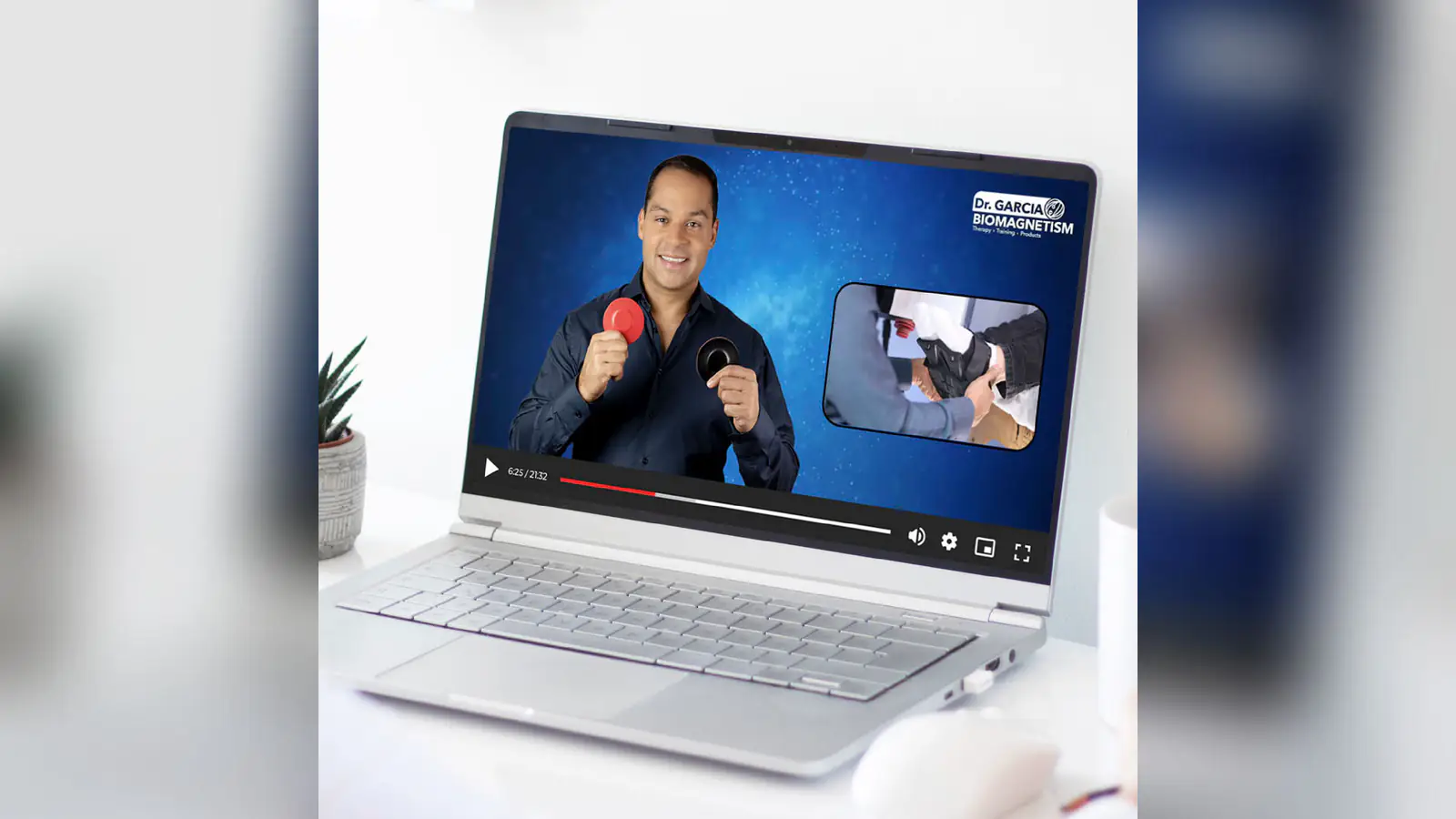
Training vs. self-treatment
Certification programs teach protocols and ethics so practitioners do not overclaim medical cures. See online training.

Watch learning video insight
Quick overview only. Chronic insomnia or suspected apnea: see a licensed clinician.
Circadian rhythm & sleep pressure (why clinicians start here)
Short answer: Proven sleep care stabilizes wake time, light exposure. and apnea screening before any wellness add-on. magnet work does not re-time your circadian clock like light therapy or chronotherapy.
Sleep pressure builds with wake time; circadian alerting follows a roughly 24-hour clock. Mis-timed light, shift work, caffeine, and anxiety can fragment sleep architecture. That is why proven pathways stress schedule stabilization, light strategies, and ruling out apnea—before optional wellness add-ons.
magnet work does not re-time your circadian clock in the way light therapy or prescribed chronotherapy might. If used, frame it as possible relaxation support—not a substitute for CBT-I. medicines. or devices.
Is there studies for biomagnetism and insomnia?
Short answer: No large, widely accepted clinic trials set up magnet work as an insomnia treatment. most reports are anecdotal. use standard sleep care as primary.
No large, widely accepted clinical trials establish biomagnetism as a treatment for insomnia. Mechanisms described in practitioner literature (e.g., terrain / pH balance concepts) are not mainstream sleep-medicine endpoints. Most reports are anecdotal or experiential. Frame biomagnetism as a wellness approach only, with standard sleep care as primary.
For mainstream sleep science background, use authoritative patient resources (e.g., NIH, CDC, Sleep Foundation)—linked in our references below.
How does biomagnetism differ from other sleep supports?
Short answer: CBT-I and clinician-directed meds have the strongest mainstream evidence. magnet work sits in the wellness column with limited insomnia proof. compare approaches before choosing any add-on.
| Approach | Evidence in mainstream sleep medicine | Notes |
|---|---|---|
| CBT-I & behavioral sleep medicine | Strong for chronic insomnia | First-line non-drug option in many guidelines. |
| Prescription / OTC meds | Variable; clinician-directed | Risk/benefit depends on age, comorbidities, substance use. |
| Acupuncture (clinical trials) | Mixed / emerging for some populations | Different method; not interchangeable with biomagnetism. |
| Meditation & relaxation | Supportive for stress-related insomnia symptoms | Often adjunct; not a standalone fix for all diagnoses. |
| Biomagnetism (this site's scope) | Limited / not established for insomnia | Wellness-framed; must not delay medical or mental-health care. |
Who might consider biomagnetism—and who should not
Short answer: Adults already under medical sleep care may explore it as a supportive narrative. pause if you have untreated apnea, unsafe daytime sleepiness, pregnancy without OB clearance. or implanted devices not cleared for magnets.
May be appropriate to explore (with medical oversight)
- Adults already engaged with medical care who want a structured complementary narrative.
- People focused on stress regulation and body tension—not acute medical instability.
Who should pause or avoid
- Severe untreated sleep apnea symptoms, narcolepsy, or unsafe daytime sleepiness.
- Unstable cardiopulmonary disease, pregnancy without OB guidance, or acute mental-health crisis.
- Implanted devices when magnet placement is not cleared by your specialist.
First-line sleep care (before optional add-ons)
Short answer: Fix schedule, light, caffeine, bedroom environment. and mental-health support first. ask about CBT-I for chronic insomnia before any magnet work sessions.
Consistent schedule, morning light, caffeine limits, alcohol awareness, bedroom environment, movement, and mental-health support when indicated. For chronic insomnia, ask about CBT-I—the behavioral treatment with the strongest non-drug evidence base.
- Stable wake time + light exposure plan
- Wind-down routine without doomscrolling
- Screen for apnea if snoring, witnessed pauses, or morning headaches
- Discuss medicines that fragment sleep with your prescriber
When to Consult a Healthcare Provider
Short answer: See a doctor or sleep specialist for chronic insomnia, loud snoring with pauses. dangerous daytime sleepiness, restless legs, mood-linked sleep change. or symptoms. That persist despite good sleep hygiene.
You should see a doctor or sleep specialist if you experience:
- Chronic insomnia (trouble falling or staying asleep for weeks or months).
- Excessive daytime sleepiness that affects daily functioning.
- Loud snoring, gasping, or pauses in breathing during sleep (possible sleep apnea).
- Restless legs or other movement disorders that disrupt sleep.
- Sleep problems related to anxiety, depression, or other mental health concerns.
- Sleep problems that don't improve with good sleep hygiene practices.
Related guides on this site
Sleep intersects with stress, pain. and breathing. These pages use different structures on purpose—so each topic is not a duplicate of the others.
Asthma and Biomagnetism
Airways, triggers. and why emergency inhalers always come first.
Living Beyond Arthritis
Joint pain, swelling. and mobility—distinct angle from sleep-only guidance.
Anxiety and Stress
The neuroscience of hyperarousal, stress hormones. and magnet pair approaches for sleep regulation.
Health Issues Hub
Browse all condition guides and pick what matches your question.
Bottom line (balanced verdict)
Biomagnetism may be part of a complementary wellness conversation for some people, but it is not a proven insomnia treatment and must not replace medical visits, CBT-I, or prescribed care. If you choose to explore it, do so with transparent expectations, a licensed clinician involved in your sleep health, and the references below for mainstream sleep science.
Often Asked Questions
Can biomagnetism cure insomnia or sleep issues?
No. Insomnia needs a proper doctor visit. Biomagnetism is not a set fix. If you try it, use it as a wellness add-on. Keep it next to proven care like CBT-I, your meds, or any sleep device.
Is there strong proof that biomagnetism helps sleep?
No. There are no big, careful trials. Most reports are stories or pro feel. Use real sleep care as your main plan.
What often happens in a session for sleep issues?
Each pro works in their own way. Many sessions start with a check. They may use muscle tests. They pick biomagnetic pairs. They put small magnets on the body for a set time. The client rests. This is not a swap for sleep studies. It is not a swap for meds. It is not a swap for mental-health care.
Should I try biomagnetism instead of a sleep doctor?
No. Long-term insomnia is a real issue. So is loud snoring with pauses. So is bad daytime sleepiness. So is mood-linked sleep change. All these need a doctor visit. Biomagnetism must not delay tests for sleep apnea or other care.
How is this page different from plain "sleep tips" posts?
This page mixes real sleep facts with an honest proof check. It walks through a session step by step. It shows how this stacks up against CBT-I, meds, and acupuncture. So it goes well past basic "what is insomnia" posts.
Interested in Learning Biomagnetism?
Short answer: Dr. Luis Garcia's Level I & II programs teach biomagnetic pairs, safety protocols, and ethical scope so practitioners do not overclaim medical cures — explore online training after your sleep clinician is involved.
If you are interested in learning magnet work as a wellness approach, Dr. Luis Garcia's training programs provide clear learning in magnet pairs. safety protocols. and ethical practice.