Student resourcesStudy guide
Biomagnetism Section 4: Arms and Pelvis
Advance into arms, pelvis, specialized issues, posterior thorax. personal pairs. And training Covid-19 steps discussion.
Key takeaway. Module 4 is the week 7 - 8 study map. for arms, pelvis, posterior thorax, personal pairs. And specialized-issue lectures in Dr. Luis F. Garcia Level I & II - a. free companion checklist, not a substitute for LMS. videos or a medical license.
Who it is for: enrolled online learner and. Certificate candidates finishing Modules 1 - 3 who need. Lecture order (29 - 38), practice goals. And intake-language reminders before Module 5 complex cases.
In short: this published education page lists Module. 4 video units (10 lectures, ~4 - 5 hours suggested. over weeks 7 - 8) for Dr. Luis F. Garcia biomagnetism training - arms, pelvis. personal pairs, muscle-testing demos. And wellness-only client language. Course certificates document training completion. they are not government medical licenses.
Topics covered in this module
- Arms
- pelvis
- personal pairs
- Covid-19 protocol block
Want full video access to Module 4 advanced protocols?Enroll from $945 · Compare tuition plans
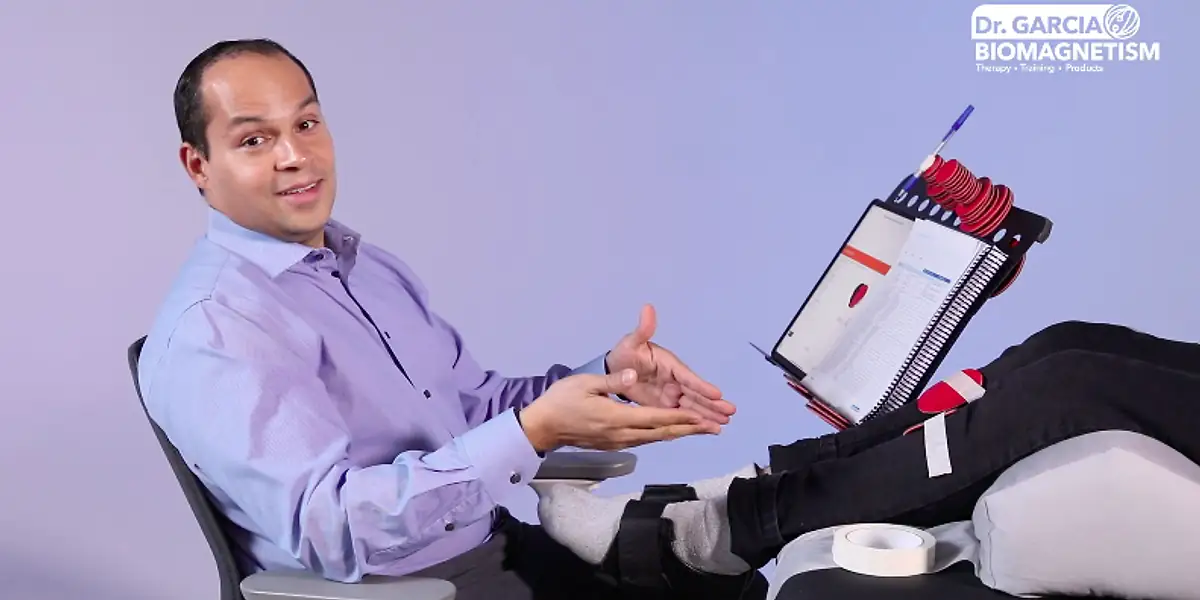
Lectures 29 - 38
Module 4 companion map - published online training videos for Module 4 - Advanced Applications
- Video units
- 10
- Watch time
- ~4 - 5 h
- Suggested weeks
- 7 - 8
- Full program
- 57 lectures
Choose another module
Module 4 of six follows the published course order - switch modules without losing lecture sequence.
This page covers: biomagnetism study guide module 4 emotional trauma
For study guide module 4, the page heading uses these topic words in the sections below: biomagnetism, section, arms, pelvis.
Keep this in mind for study guide module 4: This URL owns "biomagnetism study guide module 4 emotional trauma pairs." Broader cluster pages live on /training-online - not here.
Worth a read if you study study guide module 4: this supporting guide focuses in short on "biomagnetism study guide module 4 emotional trauma pairs." Use this page when researching this specific subtopic rather than broad general biomagnetism overviews.
Study note on study guide module 4: biomagnetism study guide module 4 emotional trauma pairs content here supports sign-up research - always defer finding to qualified doctor.
Worth noting about study guide module 4: Research context for study guide module 4 on /study-guide/module-4 supports training decisions - not self-finding or skipped medical care.
Short version for study guide module 4: Health decisions surrounding study guide module 4 require ongoing collaboration with qualified medical pros.
Before applying study guide module 4 notes, review sitewide safety standards: See disclaimer hub · module 4.
What is biomagnetism study guide Module 4?
Definition: A session-planning study tool for Module 4 - covering lower-body pair applications, emotional correlates, and advanced scanning sequence as taught across the published Level I & II portal videos.
Scope note: Lower-body pair work and emotional mapping in Module 4 stay within wellness education. Do not present emotional-correlate content as psychological diagnosis or treatment.
Summary: this published education page lists Module. 4 video units (10 lectures, ~4 - 5 hours suggested. over weeks 7 - 8) for Dr. Luis F. Garcia biomagnetism training - arms, pelvis. personal pairs, muscle-testing demos. And wellness-only client language. Course certificates document training completion. they are not government medical licenses.
Who should use this Module 4 study guide?
enrolled online students and. certificate candidates finishing Modules 1 - 3 who need. lecture order (29 - 38), practice goals. And intake-language reminders before Module 5 complex cases.
- When to use: you have portal access, completed. thorax/abdomen basics in Module 3. And want a printable watch order plus practice. tips before advanced pair work.
- When not to use: you have not enrolled. (start at /training-online), need Module 2 muscle-testing drills. first, or want diagnosis/treatment advice - this is. curriculum navigation only.
- Industry context: Industry context. Module 4 lower extremity and pelvic pair placement. training - muscle-joint landmarks and bio-magnetic balance, not. orthopedic surgery.
Which subtopics appear in Module 4 lectures?
Arms and pelvis pair work, posterior thorax, abdomen section 3, personal pairs, focused-issue framing, muscle-testing demonstration. And training Covid-19 steps discussion - always within wellness training scope, not medical care claims.
- Pair with client assessment guide and intake form guide while you watch.
- Revisit muscle testing encyclopedia entry before the demonstration lecture.
- Previous module: Module 3 study guide · Next module: Module 5 study guide
External sources
- NIH NCCIH - add-on, Alternative, or combined Health. What's In a Name? - national framing for combined wellness skills and muscle-joint. Balance (not clinic outcome validation).
- Dr. Luis F. Garcia main site - study guide module 4 visitors - main program page for study guide module 4 trainees landing from this guide.
Simple study path
How to use this page
Module 4 study path for Module 4 - Advanced Applications: four steps in order, in plain English for international students.
read objectives → watch lectures 29 - 38. in portal order → apply the three practice. tips → open Module 5 when placement and. intake language feel steady.
- Step 1
Read your goals
Module 4 (Module 4 - Advanced Applications) objectives cover Arms - they define "finished" for this section.
- Step 2
Watch the videos in order
In your portal, play Module 4 lectures in the numbered order listed below for Module 4 - Advanced Applications.
- Step 3
Practice what you learned
Use Module 4 practice tips on Module 4 - Advanced Applications before advancing - slow reps beat skipping ahead.
- Step 4
Go to the next module
When Module 4 feels solid, open Module 5 or enroll for full Module 4 - Advanced Applications video access.
On this page
Practice goal for Module 4
9 Module 4 teaching lectures for Module 4 - Advanced Applications plus 1 student experience unit
Note pairs that still feel unclear, re-watch those units, and ask one forum clarifying Q (study-guide surface this guide)
What you should learn
Learning objectives
After Module 4, you should be able to explain or demonstrate each of these points in your own words.
after Module 4 you should connect. intake answers to scanning priorities, use wellness-only client. language, refer medical red flags. And demo muscle testing with clear boundaries -. not diagnose conditions.
- 1
Connect intake answers to scanning priorities
- 2
Use wellness-only language with clients
- 3
Refer medical red flags appropriately
- 4
Rehearse muscle-testing demonstrations with clear boundaries
Watch in this order
Lecture list for Module 4
10 units · lectures 29 - 38 of 57 in the full program. Open each title in your online training portal - this list is only your checklist.
ten units cover specialized issues, abdomen. section 3, posterior thorax, muscle-testing demonstration, arms, pelvis. training Covid-19 steps discussion, personal pairs. And a student experience segment - watch in. listed order only.
- 29
Getting to Know Dr. Luis F. Garcia - module-4
Teaching lectureTeaching video · Module 4
- 30
Exploring Specialized Issues in this study guide module 4 sequence (module-4)
Teaching lectureTeaching video · Module 4
- 31
Abdomen (Section 3) - module-4
Teaching lectureTeaching video · Module 4
- 32
Posterior Thorax - module-4
Teaching lectureTeaching video · Module 4
- 33
study guide module 4: Muscle Testing Demonstration (module-4 · this guide)
Teaching lectureTeaching video · Module 4
- 34
Arms - module-4
Teaching lectureTeaching video · Module 4
- 35
Pelvis in this study guide module 4 sequence (module-4)
Teaching lectureTeaching video · Module 4
- 36
study guide module 4: Covid-19 (module-4 · this guide)
Teaching lectureTeaching video · Module 4
- 37
Personal Pairs in this study guide module 4 sequence (module-4)
Teaching lectureTeaching video · Module 4
- 38
module-4 covers: Biomagnetism Experiences
Student storyModule 4 - Advanced Applications: real-world student experience from the published Level I & II library
Apply what you watched
Practice tips
Take a few short Module 4 - Advanced Applications actions this week and store them in plain language for later review.
draft your intake form, review the. therapist intake guide. And log which pairs need a re-watch before. you practice on volunteers.
- Tip 1
Draft your intake form before module 4 practice
- Tip 2
Review /practitioner-intake-form-guide
- Tip 3
Track which pairs need re-watch. post one forum question on unclear placement
Optional next step
Ready for full video access?
Study guides stay free. The full Dr. Luis F. Garcia Level I & II video course unlocks after enrollment - Module 4 - Advanced Applications readers here can compare plans first. published tuition starts at $945 (one-time plan). You can compare payment options before you decide.
Common questions
Module 4 study guide FAQ
On this module 4 guide: what is Module 4 in Dr. Luis F. Garcia biomagnetism training?
Good to know about study guide module 4: Module 4 - Advanced Applications - is weeks. 7 - 8 of the online Level 1 and 2. Path: ten video units (lectures 29 - 38) on arms. Pelvis, posterior thorax, personal pairs, focused issues. And muscle-testing demonstration. This page is the free lecture checklist. Videos live in your training portal.
Who should use the Module 4 study guide?
Clear view on study guide module 4: Enrolled learner and certificate candidates. Who finished Module 3 thorax/abdomen work and want. A plain-English watch order, practice goal. And links to intake and assessment guides -. Not people checking programs.
What topics does Module 4 cover (study guide module 4)?
Worth noting about study guide module 4: focused-issue framing, abdomen (section 3), posterior thorax, muscle-testing demonstration, arms, pelvis, training Covid-19 steps discussion, personal pairs, plus a learner experience unit - all wellness-education context from the published course.
For module 4: how long should I spend on Module 4?
Worth a read if you study study guide module 4: The course map suggests weeks 7 - 8. With roughly 4 - 5 hours of video plus published. Practice. You have 12 months of access - slow. Down if muscle testing or intake language still. Feels shaky.
study guide module 4 — Does finishing Module 4 mean I can diagnose. or treat medical conditions?
Study note on study guide module 4: No. Module 4 teaches pair work and session skills. Within training scope. Certificate documents course finishing. It is not a doctor license, right to prescribe. Or emergency-care training proof.
On this module 4 guide: what should I study before Module 4?
Short version for study guide module 4: Complete Module 3 thorax/abdomen lectures, review the scanning steps and session checklist. And stabilize Module 2 muscle testing - then use the Module 3 study guide and therapist intake form guide linked from this page.