This article is for general information and training context, not personal medical advice. See our disclaimer and editor policy.
This site is an authorized affiliate partner for Dr. Luis Garcia's training — not the main seller. See why enroll through us. We earn a commission when you enroll through our partner links; this does not change the price you pay. Read our full editorial policy.
What is biomagnetism? Plain summary
Biomagnetism uses magnet pairs on the skin during a wellness visit.
You stay dressed. Sessions often last about an hour.
It is an add-on for some people. It is not ER care or surgery.
Good training teaches limits and when to send you to a doctor.
Biomagnetism is a wellness method that uses magnet pairs on the skin.
You stay dressed. Visits are usually about an hour.
It is an add-on for some people. It is not ER care.
It is not a drug. It is not surgery.
Good training teaches limits and when to send you to a doctor.
Read safety and proof pages before you pay for class.
Take your time.
Ask before you pay.
Keep your doctor informed.
Call ER for emergencies.
Read each profile twice.
Fees vary by city.
Online may cost less.
We are a guide site only.
Train first if you sell sessions.
Rules can change on the main site.
- Also called biomagnetic pair therapy.
- Not the same as PEMF mats or store magnets.
- Also called biomagnetic pair therapy.
- Not the same as PEMF mats or store magnets.
- Cert means you took a course—not a medical license.
Therapy basics walkthrough
New to magnet pair work? This plain guide explains the basics. The sections below go deeper.
The simple idea
Two magnets go on two body points at once.
One side is often north. One side is often south.
You stay dressed. Visits are often about an hour.
What it is not
It is not a drug. It is not surgery.
It is not a diagnosis from your doctor.
It is not ER care for chest pain or stroke signs.
- Not the same as a store bracelet.
- Not the same as a hospital MRI you operate yourself.
- Cert means course done—not a state medical license.
What a fair visit looks like
Health questions come first.
Magnets rest on set points from a lesson map.
You rest while pairs stay in place.
Notes and follow-up times are shared at the end.
Words you will see below
Pair means two magnets used together.
Muscle test is a class skill—not a lab test.
pH talk in class is theory—not proven for every disease.
Before you train or book
Read safety and ethics guides on this site.
Keep your doctor in the loop.
Compare schools on cost, pairs taught, and support.
In one sentence: Magnet pair work places two magnets on mapped skin points—often after intake and a class muscle test. You stay dressed. It is add-on wellness, not medical diagnosis or treatment. Trained people screen you and work with your doctor when needed.
Ready to explore certification after the basics?
Educational guide — training formats and enrollment details live on our training hub.
Understand the Method
Build a solid base before moving into protocols and special cases.
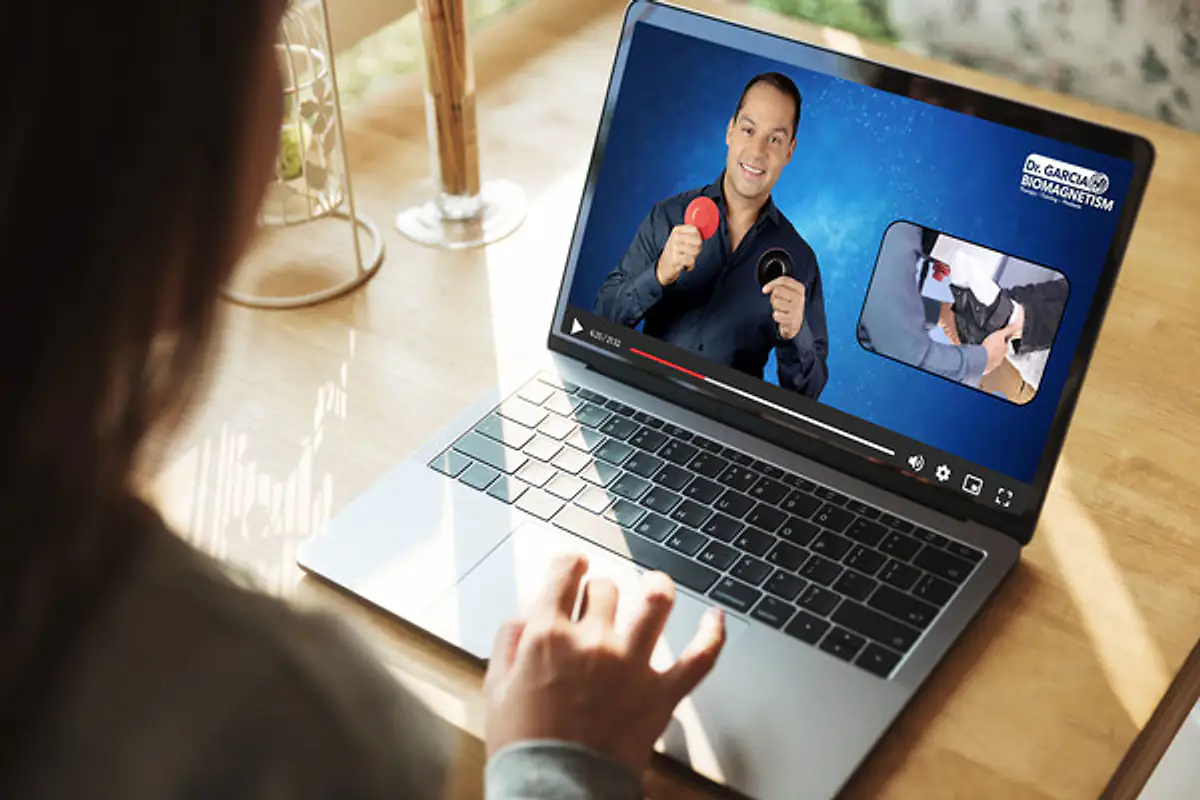
Watch learning video insight
Learning content only. Not a diagnosis or a substitute for pro healthcare.
A Simple Definition of Biomagnetism Therapy
Biomagnetism therapy—also called biomagnetic pair therapy—is a complementary wellness approach that places pairs of small therapeutic-grade magnets on mapped points of the body. Each pair uses north and south polarity on two defined locations. Practitioners describe the goal as supporting the body's natural balance; it is not a medical test, diagnosis, or cure.
Dr. Isaac Goiz Durán developed the modern pair framework in the late 1980s. English-language programs such as Dr. Luis Garcia's Biomagnetism and Beyond curriculum later standardized training, safety modules, and large pair maps (320+ pairs). For historical context, see history of biomagnetism therapy.
Typical Session Flow (Step by Step)
Sessions vary by practitioner, but certified protocols usually follow a predictable sequence. This is what clients should expect from legitimate practice:
1. Intake & consent
The practitioner reviews health history, medications, implanted devices, pregnancy status, and goals. Scope and limits are explained before magnets are used.
2. Assessment
Many trained protocols use muscle testing or structured point checks to prioritize which biomagnetic pairs may be relevant for that session—not random placement.
3. Pair selection
A north–south magnet pair is chosen from a curriculum map (modern courses teach 300+ pairs). Each pair links two anatomical points.
4. Placement
Magnets rest on top of clothing at defined locations for a set duration—typically while the client rests quietly. No injections or surgery.
5. Rest & observation
The client lies still while pairs remain in place. Practitioners watch for discomfort and stop or adjust if needed.
6. Aftercare notes
Hydration, rest, and follow-up timing are discussed. Legitimate practitioners document what was done and never advise stopping prescribed care.
For a longer practitioner-oriented walkthrough, see biomagnetism therapy session guide.
How Do Biomagnetic Pairs Work in a Session?
A session starts with a quick chat. The pro asks about your past health. Next, the pro runs a check. This check is often muscle testing. It points to which pairs might help. Then the pro sets the magnets in pairs. The magnets sit on top of your clothes. They stay there for a set time.
Practitioners describe these pairs as a way to support the body's natural pH balance, which they associate with healthier immune function. During a session, you simply lie back and rest while the magnets are in place. For a visual map-based introduction, see biomagnetic pairs explained.
Beginner Glossary: Key Terms
New to biomagnetism? These six terms appear in almost every training module and client conversation.
- Biomagnetic pair
- Two magnets (north and south polarity) placed on specific mapped points at the same time— the core unit of biomagnetism protocol work.
- pH balance (training context)
- Educational framing used in many courses: practitioners describe supporting the body’s acid–base environment. It is theory, not a proven disease mechanism in peer-reviewed consensus.
- Muscle testing
- A manual assessment skill taught in certification programs to help prioritize pairs. Requires training; accuracy depends on practitioner skill and protocol discipline.
- Biomagnetism and Beyond
- A widely taught English-language curriculum (Dr. Luis Garcia) covering Level I & II certification, pair maps, safety, and practice ethics.
- Complementary wellness
- Used alongside—not instead of—medical diagnosis, emergency care, labs, and prescribed treatment.
- Static magnets
- Non-electric therapeutic-grade magnets used externally. Distinct from MRI machines, PEMF devices, or consumer bracelet products.
How People Say Biomagnetism Therapy Helps (Complementary Only)
Many see biomagnetism as one tool in a bigger wellness kit. The feel can shift from one person to the next. Here are some of the common gains people share:
- A boost in calm and balance after stress.
- A gentle, non-invasive option for daily wellness.
- Soft support for those with long-term issues, used with medical care.
- A lighter, clearer, more upbeat feel for some.
Important Safety Notes & Limits
Biomagnetism is not a cure. It is not a swap for medical care. It does not replace ER care. It does not replace lab tests. It does not replace your meds. Any change to your meds should come from your doctor.
Have a pacemaker? Or an implanted device? Then magnets should not sit over those spots. Pregnant clients need extra care. They need a guide from a pro. A fair pro will respect these lines. They will also push you to talk to your medical team.
Biomagnetism vs Acupuncture vs Reiki
People often compare biomagnetism to other complementary approaches. This table is educational—not a ranking of which therapy is "better" for any condition.
| Aspect | Biomagnetism | Acupuncture | Reiki |
|---|---|---|---|
| Primary tool | Paired static magnets on mapped body points | Fine needles at meridian points | Hands-off or light-touch energy facilitation |
| Training emphasis | Pair maps, muscle testing, contraindication screening | Meridian theory, needling technique, licensure pathways vary by region | Attunement levels, intention, session structure |
| Typical session | Intake → pair placement over clothes → rest | Needle insertion → dwell time → removal | Client rests while practitioner channels energy |
| Evidence status | Mixed literature on pairs; strong claims are not consensus-backed | More published trials for some pain/nausea indications; scope varies | Mostly small studies; often classified as supportive care |
| Medical role | Complementary wellness only | Licensed in many regions; sometimes integrated in clinical settings | Complementary supportive care in many settings |
Detailed comparison guides
Biomagnetism vs Acupuncture
Compare tools, methods, and when each might be appropriate as a wellness approach.
Biomagnetism vs Reiki
Understand the differences between physical magnets and energy healing approaches.
Biomagnetic Pairs Explained
Go deeper on north–south pairs, maps, and placement basics.
Is Biomagnetism Legit?
Evidence tiers, red flags, and how to spot ethical practice.
Biomagnetism for Specific Health Concerns
Many people try biomagnetism as a wellness add-on. They try it for many issues. Here are guides on each topic:
Often Asked Questions
What is biomagnetism therapy in simple words?
Biomagnetism therapy—also called biomagnetic pair therapy—is a complementary wellness method that places pairs of medium-strength magnets on specific mapped points on the body. Practitioners describe the goal as supporting natural balance; it is not medical treatment and individual experiences vary.
How does a biomagnetism session work?
A typical session includes health intake, assessment (often muscle testing in trained practice), selection of a north–south pair from a protocol map, placement over clothing for a set time while you rest, and brief aftercare guidance. See our session guide at /biomagnetism-therapy-session-guide for a longer walkthrough.
Is biomagnetism therapy a medical treatment?
No. It is not diagnosis, prescription care, or emergency treatment. Use it only as a complementary wellness approach alongside appropriate medical care.
Is biomagnetism therapy painful or invasive?
No. Magnets are placed externally on top of clothing. There are no injections, drugs, or surgery in standard biomagnetism sessions.
Who should avoid biomagnetism therapy?
People with pacemakers or other implanted electronic devices should generally avoid biomagnetism unless a clinician approves. Pregnancy and complex illness require medical guidance first. See /who-should-not-use-biomagnetism for a screening checklist.
How is biomagnetism different from wearing a magnetic bracelet?
Training teaches paired north–south placement on mapped anatomical points—often after structured assessment—not a single consumer magnet product. Research on bracelets does not automatically validate pair protocols.
Is biomagnetism therapy legit?
Legitimacy depends on practitioner behavior: certification, safety screening, honest scope, and no cure-all claims. See /is-biomagnetism-therapy-legit for a red-flag checklist and evidence tiers.
How do I learn biomagnetism properly?
Structured certification (e.g. Biomagnetism and Beyond Level I & II) covers pair maps, muscle testing basics, ethics, and contraindications. Start with /learn-biomagnetism-therapy and /biomagnetism-certification-guide before choosing a training format.